
Lexington City Owner of Record Fields
The Commissioner of the Revenue's VGSI card presents owner details inside a full parcel record. The fields on display include Owner, Co-Owner, Owner of Record, mailing address, MBLU, PID, sale data, and Book & Page. No separate title-vesting field appears on the card. For how title is actually held, read the recorded deed itself. The assessment label alone will not answer that question.
| Owner / Owner of Record | Name displayed in the City assessment record |
|---|---|
| Co-Owner | Additional owner name shown on the card, if present |
| Mailing Address | Destination for assessment correspondence; separate from situs |
| Situs / Parcel | Property context, MBLU, and PID used to identify the land |
| Last Sale | Sale date and price shown in the assessment record |
| Book & Page | Lead to the recorded deed; confirm the instrument with the clerk |
The owner of record is simply the name the City's assessment system carries for a parcel. That person may live there. They might rent it out or never set foot in Lexington City at all. Occupancy and management tell you nothing about legal title. The mailing address on the card matters too. That is where the City sends the tax bill and assessment notices each year. Many cards also include an ownership-history table, which is useful context. Still, the most recent deed in the deed records is the stronger proof of the latest transfer. Whatever the source, tie the owner name to the right MBLU or PID every time. That habit prevents a common error in a property search. It keeps you from matching a name to the wrong parcel.
Confirming the Current Owner in Lexington City
Treat the assessment card as a locator first. Then compare the recorded deed's grantee against its legal description. The Rockbridge Circuit Court Clerk holds the land instrument for the Lexington/Rockbridge court locality. Virginia SRA/COVERS may expose a free index entry where enabled, though image access requires local clerk authorization and an agreement. When the image is not available remotely, the public terminal or a copy request through the clerk is the fallback.
- Find the parcel by address or name in the City VGSI database and note its Owner and Owner of Record fields.
- Copy the MBLU/PID, Book & Page, and sale date so the deed search stays tied to one parcel.
- Search the newest likely deed and compare the grantee and legal description with the City card.
- If a business name appears, confirm that exact entity in the Virginia SCC system; the entity result does not establish parcel title.
- Owner of record
- The name the assessment card carries for the parcel.
- Vesting
- The way the deed states title is held, which must be read from the instrument.
- Grantee
- The person or entity receiving the interest in a recorded transfer.
- Recording lag
- The period between a filed deed and its appearance in an assessment display; Lexington's exact owner-field refresh interval was not published in the reviewed sources.
Lexington City Mailing and Situs Distinctions
The assessment card separates the owner's mailing address from the situs address. In the sample card, the owner mailing line is a PO Box in Lexington. The parcel itself carries its own property context. A mailing address is only a destination for official notices. It does not say where someone lives or where the land sits. If an address looks wrong, match the parcel key and deed description before drawing any conclusion about the current owner.
Lawful use. Use public owner and mailing fields for property matters, purchase diligence, or tax questions. Do not use them to stalk, harass, threaten, or harm a person.
Lexington City Current Owner Card Example
The VGSI result for PID 1081 shows how a current owner name sits beside a mailing address, parcel identifier, sale fields, and Book & Page. The record lists a sale from 2004. It illustrates the displayed fields only. It is not a current statement about another parcel. The ownership-history table includes Owner, Sale Price, Certificate, Book & Page, Instrument, and Sale Date. Those references let a researcher test whether the present owner field aligns with the recorded transaction. The Lexington City sample card shows the record layout.
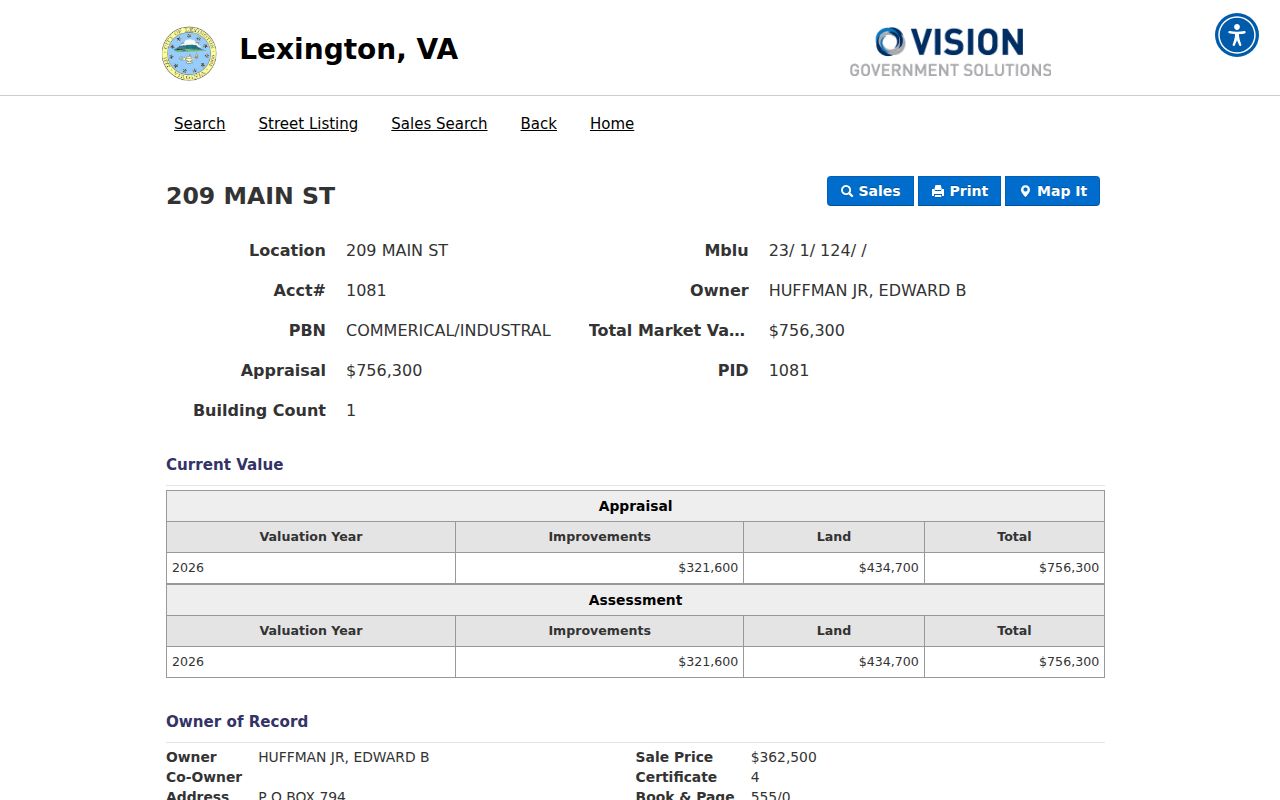
Compare the card's fields to the newest deed. Do not treat the sample's 2004 sale date as a current transfer.
How Current the Lexington City Card Is
The VGSI landing notice says sales in its database are updated monthly. It also warns that data may be slightly dated and are not guaranteed. That statement sets no refresh deadline for the Owner field. It does not promise a new deed will appear in a given month. When the question turns on a recent closing, use the recorded deed's date and grantee, then ask the Commissioner of the Revenue how the assessment display is handled.
The City's four-year reassessment took effect July 1, 2026. The next cycle is scheduled for July 1, 2030. Reassessment timing and owner-name refresh timing are different facts. A new value cycle does not prove every ownership entry was refreshed the same day. The City page carries current cycle information. The clerk remains the source for the recorded deed. See the Commissioner of the Revenue reassessment page for the current City schedule.
July 1 and a Lexington City Owner Record
Virginia assesses property for the full tax year. It does so in the name of the July 1 owner. A later sale can leave the assessment roll showing the tax-year owner. Meanwhile, the deed index may show a more recent grantee. Buyer and seller may prorate the bill in closing papers. That private adjustment never changes the name used for the annual tax assessment. Nor does it remove a lien attached to the land.
To resolve a difference, place the assessment date and the deed recording date side by side. Add the tax year too. Contact the Treasurer at 540-462-3707 for billing status. The Commissioner, at 540-462-3701, handles assessment-record questions. The clerk can confirm whether a deed was recorded. This keeps the current owner check tied to the right source. It also prevents mistaking a timing gap for a faulty transfer.
Entity and Estate Names on Lexington City Cards
The owner of record is not always a person. A Lexington City parcel can carry an entity name. An LLC, corporation, trust, partnership, or estate may hold it. The assessment card often shows only that legal entity name. Look to the deed for the capacity a fiduciary holds. A trustee, executor, or administrator signs in a stated role, and the recorded language matters. For a business, the state SCC system adds public filing details. Search the exact entity name there and note the registered office or agent. Those fields support the picture. They do not prove who holds title.
Estate transfers raise the same caution. The name of record may be an executor rather than a buyer. The circuit clerk holds the wills, qualification records, fiduciary deeds, and certificates of transfer. These records explain the shift. A vital record can date a death, but it never conveys land. For the present-owner question, read the grantee line in the newest recorded deed. To start from an address instead, the full method is on the Lexington City ownership lookup page. Deed mechanics stay with the circuit clerk record.
Requesting a Lexington City Current Record
Need an assessment card or an explanation of an owner field? Call the Commissioner of the Revenue at 540-462-3701. Questions about a bill or payment status go to the Treasurer at 540-462-3707. For a recorded deed, try SRA/COVERS if the index is enabled. You can also contact the Rockbridge Circuit Court Clerk at 540-463-2232. The clerk's counter hours run Monday through Thursday, 8:30 a.m. to 4:30 p.m. Friday hours are 8:30 a.m. to 4:00 p.m.
Existing records held by the City can also be requested through Virginia FOIA. Name the parcel, the field, a date range, or a document type. That way staff can narrow the search. The City may charge actual search and supply costs. It can also request a deposit when an estimate runs large. Court records follow their own access rules. When seller identity is the worry, the Virginia DPOR recommends checking identification against the land deed. No local property alert registration exists. For a recent transfer, this route can help locate a City-held assessment entry. The circuit clerk can confirm the recorded instrument at the same time.